 Senso-ji temple front
Senso-ji temple front
Senso-ji temple front
Senso-ji, also called Asakusa Kannon, is the largest and oldest Buddhist temple in Tokyo. It's situated in the northwest of the city, in a neighborhood called Asakusa. The temple lies at the end of a pedestrian shopping street, Nakamise-dori.
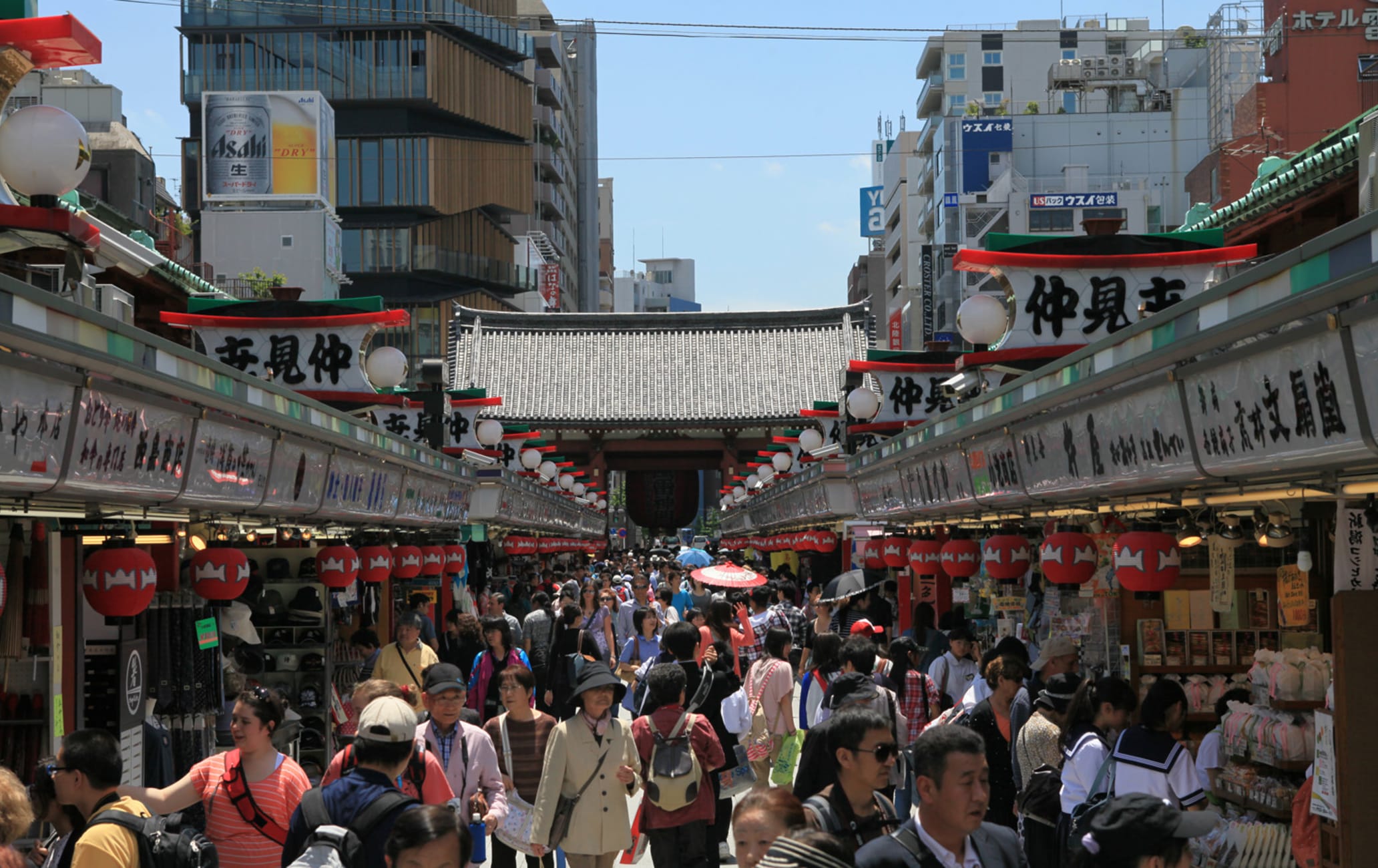 Nakamise-dori
According to Wikipedia, Senso-ji "is dedicated to Kannon Bosatsu, the Bodhisattva of compassion, and is the most widely visited spiritual site in the world with over 30 million visitors annually." In addition to the nearby Nakamise-dori, there is also a five-story pagoda on the grounds of the temple.
 Five-story pagoda
Another popular feature of Senso-ji is the large gate, the Kaminarimon, that marks the entrance to the temple grounds and Nakamise-dori. Two imposing figures of Shinto gods, kept safe in modern times behind netting, flank a large black, white, and red lantern. The gate is especially stunning at night, when lighting highlights the statues.
 Kaminarimon at Night
There are many activities that visitors to Senso-ji partake in. The temple is still an active Buddhist temple. Most visitors enjoy walking down Nakamise-dori, window-shopping even if they don't actually make any purchases. Before reaching the temple, many visitors stop at the huge incense burner that sits just outside the main hall, fanning the fragrant smoke over their bodies. It's believed that the incense has healing powers.
 Visitors Fanning Incense Smoke
Another popular activity is getting one's fortune, or omikuji. To get an omikuji, you place a 100 yen coin in the slot at the omikuji building. You then shake a stick out of the large metal container there. The number on the stick will tell you which fortune is yours. Take a piece of paper and find out what fate has in store for you!
 Coin Slot, Metal Canister, and Fortune Holders
Senso-ji is located in Asakusa, in the northwest of Tokyo. Unlike many popular tourist destinations in Tokyo, it doesn't lie on the Yamanote Line, the large looping train line that encircles much of Tokyo. Instead, to visit, one must go to Asakusa station via the Ginza or Asakusa subway line or a Tobu Railway train.
An alternate way to reach Asakusa and Senso-ji is to take a relaxing and informative cruise up the Sumida River. The cruise departs from Toyosu, Odaiba, Hinode Pier, and Hamarikyu Gardens. If you're looking to explore a lovely spot of greenery in the heart of Tokyo, Hamarikyu is an excellent spot to visit before Asakusa.
 Hamarikyu Gardens During Autumn
Once you arrive in Asakusa, it's worth seeking out the Tourist Information Center, which is located just west of Asakusa station. Then walk down Nakamise-dori to arrive at Sensoji. Be sure to leave some time for shopping. Before you enter the temple, use the water outside to rinse your hands off.
 Visitors Cleansing Before Entering Sensoji
Once you've thoroughly explored Asakusa, consider a visit to nearby Kappabashi-dori, a street where you can purchase the swiftly disappearing plastic food models displayed outside many restaurants.
 Plastic Food Models in a Store on Kappabashi-dori
According to legend, Sensoji was founded in the 7th century after a statue of the goddess Kannon was fished from the nearby Sumida River.
 Painting of the Goddess Kannon
Sensoji existed as a Buddhist temple until an air raid during World War II reduced Sensoji to the same rubble that much of Tokyo was reduced to.
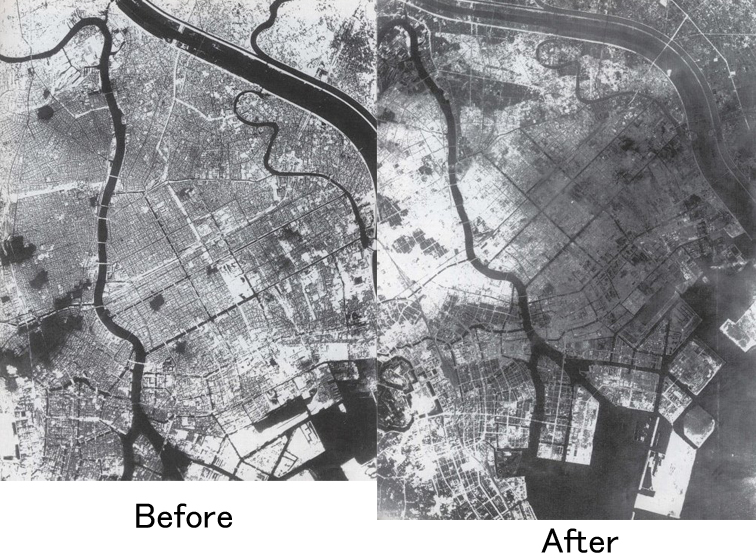 Before and After Air Raids, Aerial Photos of Tokyo
After World War II, Sensoji was lovingly rebuilt and stands today as a symbol of peace and perseverance.
 Sensoji From Above